

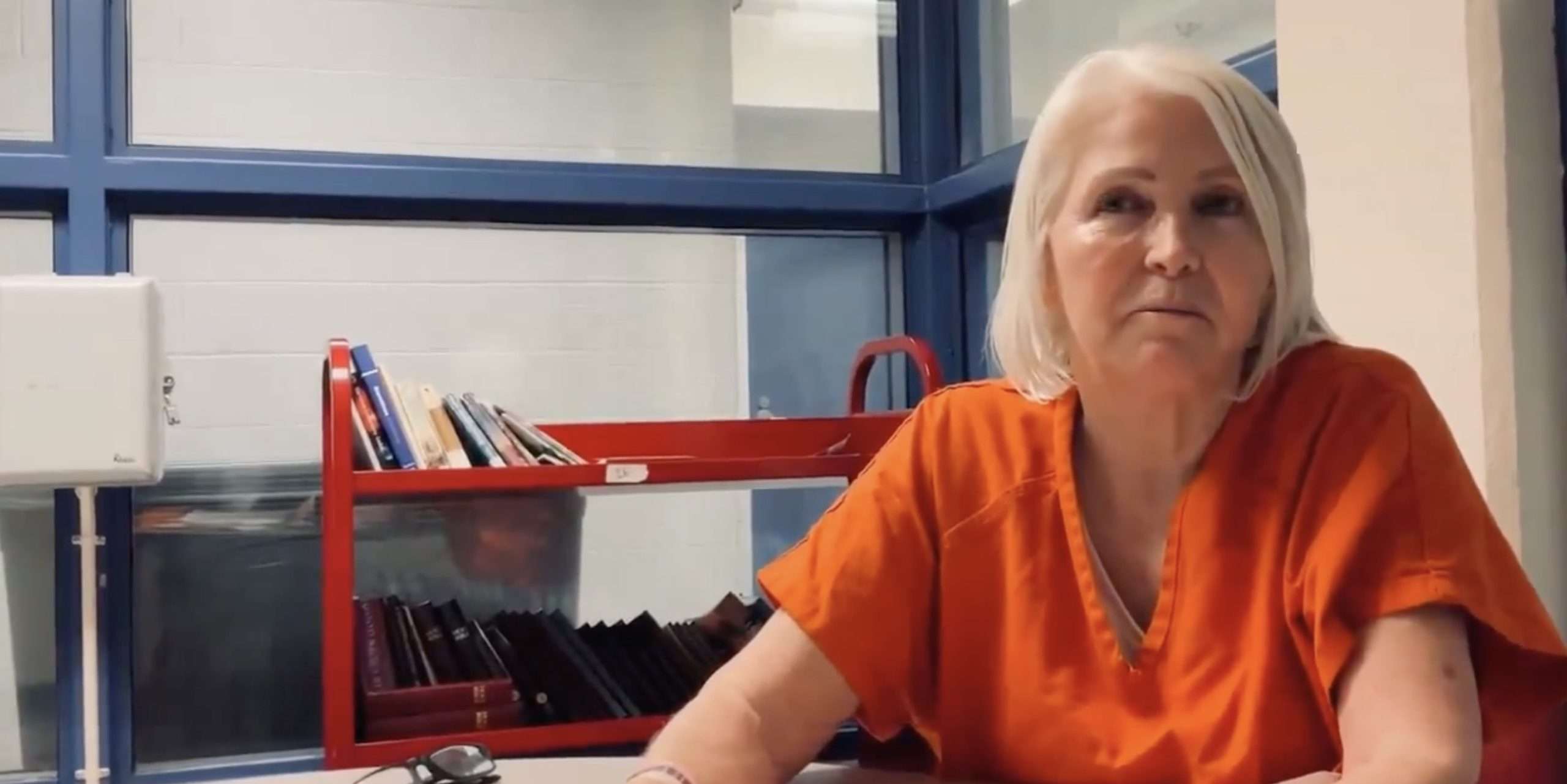
Three Colorado Court of Appeals judges spent an hour Wednesday probing whether former Mesa County Clerk Tina Peters received a sentence shaped more by a trial judge’s hostility to her election fraud beliefs than by the crimes she committed.
The three-judge panel—Ted Tow III, Craig Welling, and Lino Lipinsky—was dismissive of Peters’ sweeping arguments for dismissal but zeroed in hard on two issues that could benefit the 70-year-old Gold Star mother who has spent 15 months at La Vista Correctional Facility in Pueblo: the sentencing and a felony jury instruction error.
“The court cannot punish her for her First Amendment rights,” Judge Welling said during oral arguments at the Ralph L. Carr Colorado Judicial Center in Denver. Judge Tow was more direct: “He can’t sentence her more because he doesn’t agree with what she’s saying.”
The “he” is Mesa County District Court Judge Matthew Barrett, who at sentencing in October 2024 called Peters a “charlatan” and a “liar” while condemning her statements about election fraud. Peters’ attorney John Case argued Barrett’s rhetoric violated her First Amendment rights. Senior Assistant Attorney General Lisa Michaels countered that Barrett was responding to Peters’ own 40-minute slideshow presentation repeating her election claims during sentencing. “She made it relevant,” Michaels told the panel.
Case didn’t buy it. “I’d say that is baloney,” he told the judges.
The panel also grilled Michaels on a procedural error in the felony criminal impersonation charge. Peters was convicted for misrepresenting election conspiracy theorist Conan Hayes as county employee Gerald Wood during a 2021 voting system software update. But the jury instruction used language from the misdemeanor statute—requiring only that the impersonation “might” expose Wood to liability—rather than the felony standard requiring proof of actual liability.
Michaels argued this wasn’t reversible error because the evidence supported the felony anyway. Judge Welling wasn’t having it: “I am baffled as to the position that’s being taken—that we can somehow overlook that.”
Peters’ broader arguments fared poorly. Her attorneys claimed federal immunity under the Supremacy Clause, arguing she was acting to preserve federally protected election records when she allowed Hayes unauthorized access to copy hard drives during Dominion’s “trusted build” software update. The judges noted Peters already had copies of the records before the update—undermining the claim she needed to deceive anyone to preserve them.
Judge Tow pressed Case on why Peters lied about Hayes’ identity instead of simply authorizing his presence. Case explained Peters feared the Secretary of State would cancel the software update if they knew an outsider was observing. “So, in other words, she wanted to trick the Secretary of State into going forward?” Tow asked.
The defense also argued, confusingly, that the trial court had “no jurisdiction to decide” whether federal immunity applied. Judge Welling pointed out the logical problem: “If you’re right, and we can’t decide it—then doesn’t the conviction just stand? I’m not sure you really want what you’re asking for.”
The presidential pardon question—whether Trump’s December 2025 pardon of Peters can apply to state crimes—never came up during oral arguments despite both sides filing briefs on the issue. Attorney Peter Ticktin said they simply ran out of time in their allotted 30 minutes. But he told media afterward he expects Governor Polis will grant clemency based on the governor’s recent comments calling Peters’ sentence “harsh.”
Attorney Patrick McSweeney told CNN that Peters was “overjoyed” by Trump’s symbolic pardon. On the Trump administration’s pressure campaign against Colorado—including vetoing a water project bill, denying disaster declarations, and canceling over $700 million in federal funding—McSweeney was measured: “They could be helpful, or they could antagonize Colorado officials. I just don’t want to weigh in on that.”
As HCA reported January 10, Polis’s sudden interest in Peters’ sentence likely has less to do with mercy than with his 2026 ambitions. His “harsh sentence” comment positions him as a moderate willing to show independence from Democratic orthodoxy—useful whether he’s eyeing a Senate primary against 73-year-old John Hickenlooper or maneuvering for appointment if Senator Michael Bennet wins the governor’s race. The day before oral arguments, Secretary of State Griswold released a letter urging Polis not to grant clemency, warning it would “embolden election denialism” and amount to “caving into the demands of a vengeful President.” Attorney General Weiser’s office maintains Peters’ sentence is appropriate and reducing it would be “a grave injustice.”
The Court of Appeals will issue a written ruling in the coming months. Based on Wednesday’s hearing, Peters likely keeps most convictions but may see action on her sentence or the improperly instructed felony charge.
Peters did not appear. She remains at La Vista, with a parole hearing scheduled for September 2028. With good behavior credits, she could become eligible for a halfway house as early as November 2026.
Support Independent Local Journalism — High Country Advocate was created as a real alternative to regional media that too often silences dissenting voices while taking sides in the political struggle. Producing in-depth, unflinching reporting like this series and others is expensive: servers, editing, research time, and legal review all add up quickly. If these articles have informed you or given you new perspective, please consider supporting HCA with a paid subscription — every subscriber helps keep this reporting strong and independent. 