

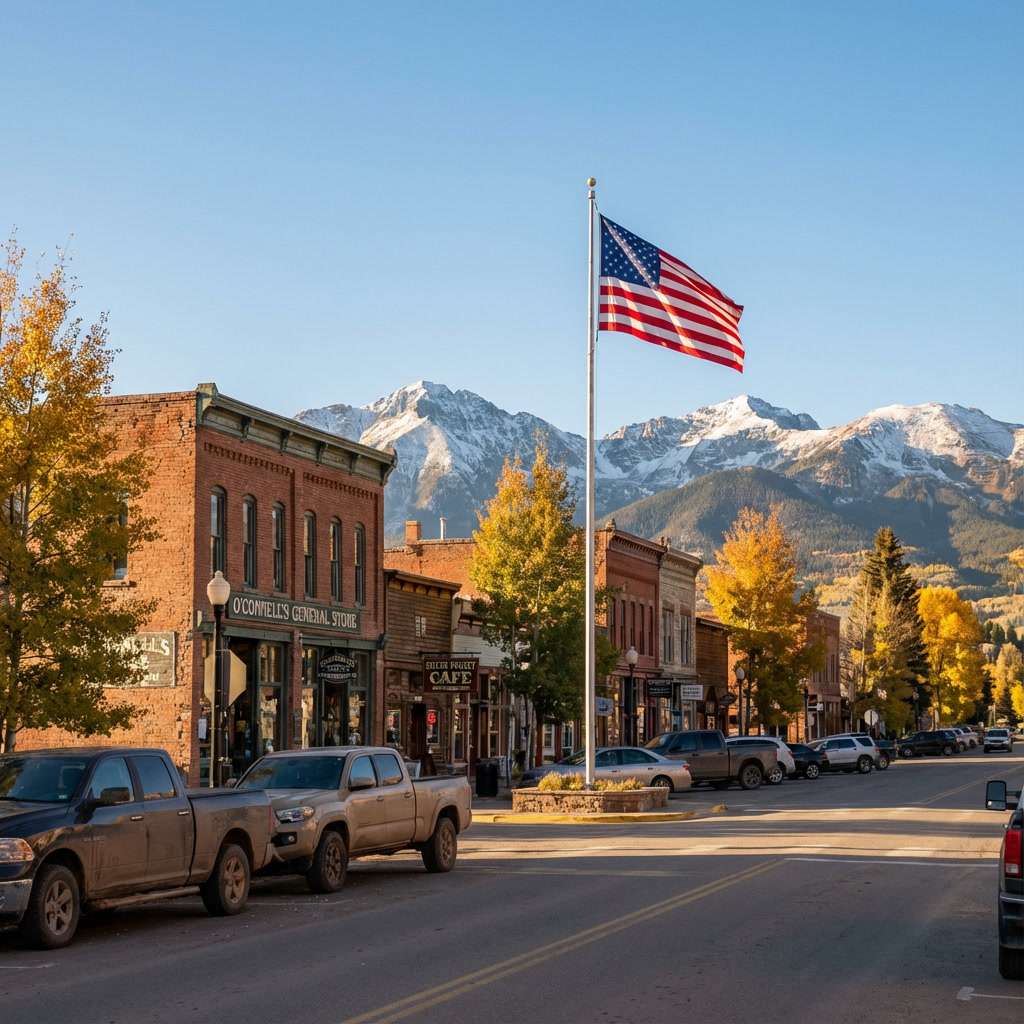
Counties Win 4 Bills, Lose State Parks Grant as Legislature Wraps
Colorado’s counties left the 2026 legislative session with four signed bills — covering legal notices, EMS funding, county enforcement authority, and landfill methane rules — but lost the state parks grant program they had sought. Commissioners at the CCI Summer Conference in Keystone also heard that Colorado nonfarm employment grew just 0.2 percent year-over-year and that post-2026 Colorado River negotiations remain unresolved.
DATA CENTER & ENERGY MORATORIUMS
Buena Vista imposed an emergency moratorium on data center applications, citing gaps in town code around water use, energy demand, and noise. Grand County did the same through June 2027, and Teller County made its six-month energy moratorium permanent — covering data centers, commercial solar, battery storage, and potential nuclear plants. Teller Commissioner Erik Stone warned that energy producers who build in a county gain eminent domain rights over private land along transmission routes even in counties that receive none of the power.
BUILDING CODES
Summit County adopted the 2024 ICC building codes, including a first-of-its-kind ban on gas-fired outdoor heating systems tied to the county’s near-capacity natural gas supply. Lake County approved the same 2024 code series, and Woodland Park adopted the 2021 International Fire Code — all three racing a state deadline that would have forced a costlier alternative.
AFFORDABLE HOUSING
Pitkin County commissioners voted 4-1 to override a unanimous Planning Commission rejection and advance a $17.9 million infrastructure project at the Phillips Mobile Home Park in Woody Creek, adding 40 affordable units to spread the cost of replacing four failing septic systems. Crested Butte adopted its Five-Year Housing Strategy 6-0, targeting the gap where mobile home units now sell above $700,000, though neighborhood residents packed a work session to oppose voluntary zoning incentives. Salida raised deed-restricted home price ceilings by $42,000 while a community fight over off-leash dog access at Vanderveer Ranch put a potential November ballot question on the table.
TRANSIT
Rifle heard a feasibility study putting a proposed fieldhouse at up to $46.6 million and received urgent public pleas to find permanent funding for the Hogback bus route before it expires in November. Garfield County renewed its $2.9 million jail health contract and signed a letter of support for the same regional transit feasibility grant Rifle endorsed.
SENIOR MEALS
Garfield County’s work session heard a request from Valley Meals and More for nearly $50,000 to fund home-delivered meals for 40 vulnerable seniors through year-end, with the item headed to the July 15 regular meeting for a vote. The county’s Department of Human Services simultaneously announced it will resume direct management of congregate meal sites July 1, cutting the meal service contract by nearly $80,000.
PUBLIC SAFETY
Glenwood Springs unanimously approved a $2.4 million, 10-year Axon contract for body cameras, AI-generated police reports, and drone first-responder capability, while splitting 5-2 on a water service agreement for a proposed 100-unit development outside city limits. Council also directed staff to seek outside legal counsel on the ICE detention facility at 100 Midland Avenue, where a Planning and Zoning commissioner publicly challenged the city attorney’s legal position during public comment.
AROUND THE HIGH COUNTRY
Chaffee County denied a permit for a 30-site commercial campground at Pine Creek Canyon after neighboring landowners warned of emergency access problems, bear conflicts, and unmanageable traffic in a canyon with one road in and one road out. Colorado Parks and Wildlife had recommended a 500-foot setback from the creek and a seasonal closure to protect wildlife — conditions commissioners found the applicant had not adequately addressed. The vote to deny was 3-0.
Cañon City voted 4-2 to formally withdraw from the Fremont County Recreation District’s pool project after Mayor Phil Lund concluded no city funding source could sustain the estimated $700,000 annual operating cost over 25 years. Immediately after the vote, Lund formed a seven-member study committee to develop ballot language options for how to handle the sales tax funds already collected, with a report due July 13.
Breckenridge halted new out-of-town water connections for one year while the town completes a Water Master Plan update and rehabilitation of the Gary Roberts water treatment plant. Existing out-of-town customers under contract are not affected.
Vail targeted water cuts of 40 to 55 percent beyond the Eagle River Water and Sanitation District’s already-mandated 33% reduction as Stage 3 drought conditions tightened. The town shut off five of six public fountains, cut annual flower plantings by 85 percent, and activated a virtual emergency operations center meeting every two weeks with water providers and agricultural interests.
A Basalt drug ring was indicted on 48 counts after a two-year investigation found the operation packaged MDMA and ketamine as artisan chocolates and nasal sprays sold under brand names including “Socialistas” and “Alpen Glow.” Seven defendants face charges including drug trafficking, manufacturing, conspiracy, money laundering, and child abuse, with the case to be prosecuted by the 5th Judicial District Attorney’s Office in Eagle County.
Park County’s 200-megawatt South Park Battery Energy Storage System near Hartsel moved toward construction after contractor Blattner Energy held a hiring and subcontractor open house June 10 in Fairplay. The RWE Clean Energy project — 120 Tesla Megapacks on 36 acres — is expected to generate $9.44 million in property taxes over its life and deliver two underground water storage tanks to the Hartsel Fire Protection District.
Aspen unanimously approved converting the 1886 Smith-Elisha House at 320 West Main Street into a six-room boutique lodge, departing from a 2017 ordinance that set the minimum room count at ten. The council added conditions requiring after-hours emergency management response within 30 minutes and a compliance audit every two years after opening.
Eagle approved a zero-upfront-cost energy audit covering battery storage, distributed solar, and water meter replacements, and unanimously advanced 22 town-owned parcels through the Downtown Development Authority petition process to allow adjacent private owners to seek inclusion and unlock tax increment financing. The council also directed staff to rewrite the town’s variance standards after the community development director reported receiving nine variance requests in her first five weeks — none meeting the legal bar.
Jackson County ratified a POST certification waiver for sheriff-designate Scott Fisher, who has been unable to take office due to surgery, with County Coroner George Crockett serving as acting sheriff under an 1877 statute officials described as archaic. The acting sheriff told commissioners he had found procedural problems in the department and was working to correct them, while flagging the jail’s drunk tank lining as an urgent safety repair.
Lake City rejected a Planning Commission recommendation to require a six-foot fence at an OHV rental business, with trustees directing staff to draft an ordinance clarifying that rental equipment does not require screening. The board also postponed a 30-year right-of-way lease with Lake City Auto after the lessee’s attorney submitted same-day redline changes that would extend any exit process by roughly 18 months.
Alamosa City Council approved four automated photo radar corridors on streets where studies found hundreds of vehicles per day speeding, with a 30-day warning period before any citations issue. The council also advanced ordinances on first reading to close a loophole in the city’s semi-truck parking ban and establish $100-per-day fines for building code violations. Alamosa County accepted a clean annual audit with no material weaknesses and approved a special use permit for a 5,700-square-foot indoor marijuana cultivation facility.
Fremont County temporarily lifted truck traffic restrictions at a Parkdale quarry, allowing Martin Marietta Materials to move stockpiled aggregate by road for two years while rail operations remain suspended. The board capped truck trips at 240 per day at no more than 30 per hour, with Martin Marietta required to return before the two-year period expires.
Park County passed its short-term rental ordinance on final reading after a three-year stakeholder process, establishing a 24-month path to “responsible owner” status and targeting roughly 750 unlicensed properties. The ordinance takes effect July 19.
Gunnison County approved more than $1.1 million in airport infrastructure contracts and voted to support two Trout Unlimited watershed restoration projects near Crested Butte — one targeting mining waste draining into Crested Butte’s drinking water source, the other removing 70,000 cubic yards of overburden from a stream near Tin Cup. New revenue analysis also revealed sharp year-to-date declines in lodging and entertainment tax collections compared to 2025.
Support Independent Local Journalism — High Country Advocate was created as a real alternative to regional media that too often silences dissenting voices while taking sides in the political struggle. Producing in-depth, unflinching reporting like this series and others is expensive: servers, editing, research time, and legal review all add up quickly. If these articles have informed you or given you new perspective, please consider supporting HCA with a paid subscription — every subscriber helps keep this reporting strong and independent. 