

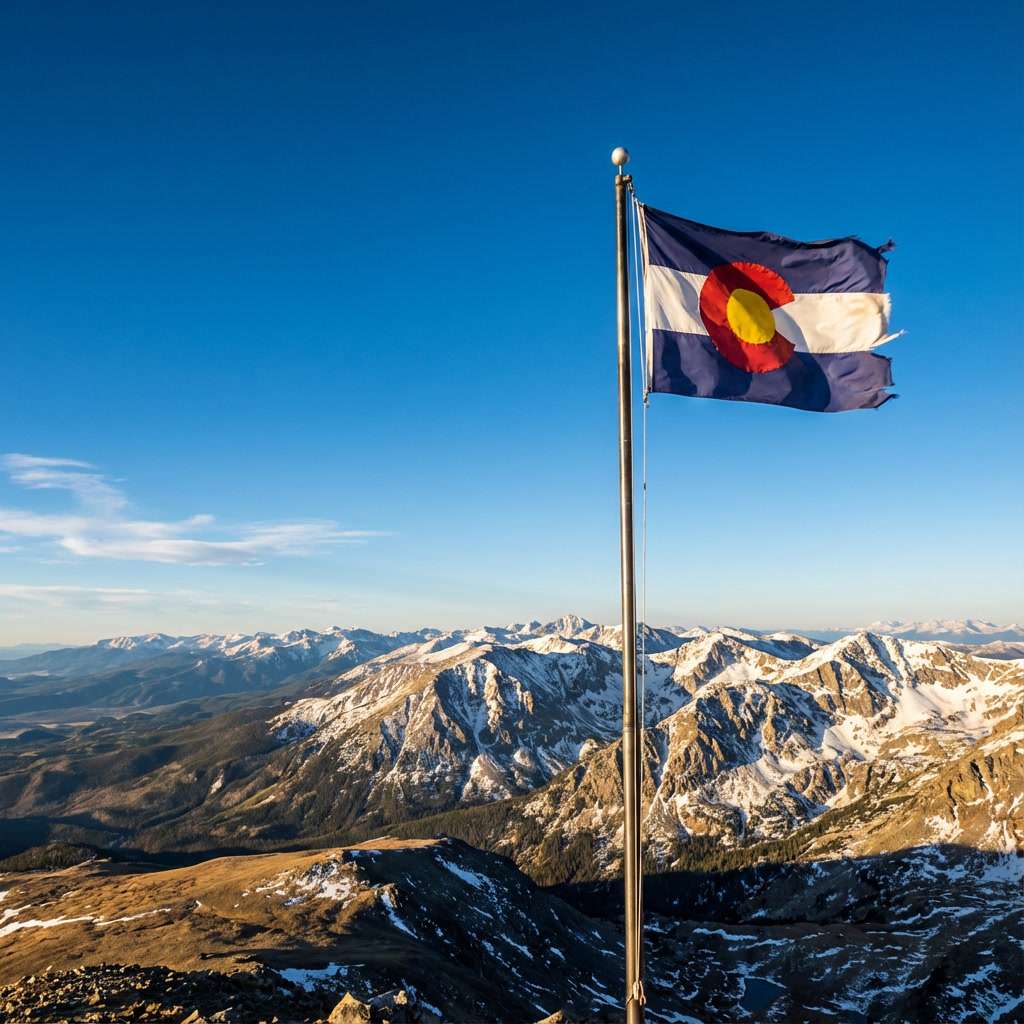
Colorado’s June 30 primary faces a federal court challenge that has split the state Republican Party, exposed a constitutional fracture in how Colorado runs elections, and drawn opposition from four of the party’s own congressional incumbents. The Colorado Republican Party filed an emergency motion April 20 asking U.S. District Court Judge Philip A. Brimmer to bar Secretary of State Jena Griswold from sending Republican primary ballots to 2,032,366 unaffiliated voters. The state says reprogramming its election management system would take seven months. The federal ballot deadline for military and overseas voters falls May 16.
The party’s internal collapse over the motion is documented in court filings. The Executive Committee voted 9 to 15 against pursuing it on April 9. The State Assembly overrode that vote two days later, then moved to censure the 15 members who had opposed it. Chair Brita Horn instructed outside counsel in writing not to file. She resigned April 17, and her successor waived attorney-client privilege, fired General Counsel Steve Klenda, and filed the motion three days later. Brimmer has not ruled.
The 2,032,366 unaffiliated voters at the center of that dispute form an absolute majority of Colorado’s active registered electorate — more than the Democratic and Republican rolls combined. That majority has been building since 2015, when roughly 35 percent of the state’s active voters were unaffiliated. In HCA’s mountain corridor, nine of twelve counties have cleared the threshold, with Summit, Eagle, Gunnison, and Routt counties each at 55 or 56 percent.
The Tenth Circuit Court of Appeals reconfigured the constitutional path Colorado must walk to enforce its ghost gun law. The court reversed a lower court ruling upholding Senate Bill 23-279, found the district court applied a rejected legal standard, and sent the case back with orders to apply the Bruen historical tradition test — requiring Colorado to find a meaningful analogue to serial number requirements in 1791 law. Colorado has not identified one. The law remains in force while the case proceeds.
In Elbert County, the Colorado Public Utilities Commission voted 3 to 0 on April 10 to override the county’s permit denials for 48 miles of Xcel Energy high-voltage transmission line, invoking a state override statute used three times in 21 years and ordering Xcel to pay a $2.5 million impact fee. Elbert filed for reconsideration April 22. Bipartisan House bill HB26-1278 would bar utilities from filing eminent-domain suits before securing both state and local permits — a step Xcel had not completed before suing to condemn 13 Elbert County landowners.
Denver Water announced April 20 it will drain Park County’s Antero Reservoir and close it to recreation after May 13. Statewide snowpack sits at 17 percent of the historic median. Moving Antero’s stored water to Cheesman Reservoir in Jefferson County saves roughly 5,000 acre-feet from evaporation — Antero’s 18-foot depth spread across 2,300 surface acres produces the highest evaporation rate in the Denver Water system. The reservoir dried completely in 2002 and did not refill until 2007.
Democratic congressional candidate Eileen Laubacher raised $8.58 million through Q1 2026, the highest total of any Colorado federal candidate this cycle. Her committee paid 56 percent of operating expenditures to Helix Campaigns LLC, a Washington digital acquisition firm. Meta ad library data shows the campaign spent roughly $1.97 million on donor-solicitation ads running nationally while spending under $5,000 on ads reaching voters in Colorado’s 4th Congressional District — a ratio of $470 pursuing out-of-state donors for every $1 reaching the district.
Support Independent Local Journalism — High Country Advocate was created as a real alternative to regional media that too often silences dissenting voices while taking sides in the political struggle. Producing in-depth, unflinching reporting like this series and others is expensive: servers, editing, research time, and legal review all add up quickly. If these articles have informed you or given you new perspective, please consider supporting HCA with a paid subscription — every subscriber helps keep this reporting strong and independent. 